

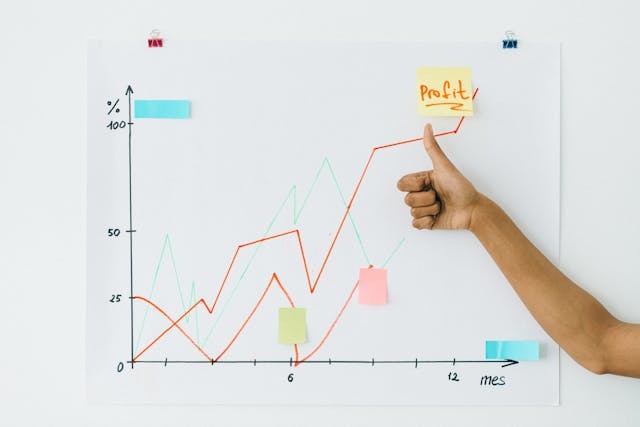
Featured Image Caption: A Person Hand with the Thumbs Up Sign
Jump to read...
The financial markets have always been driven by speed, faster transactions, quicker data analysis, and real-time decision-making. In recent years, algorithmic trading has taken this concept to new heights, enabling traders to execute thousands of transactions in milliseconds. Now, with the advent of ultra-high-speed algorithms powered by next-generation computing technologies, the trading landscape is on the brink of a major transformation. These innovations promise not only faster execution but also smarter strategies that could redefine market dynamics.
The Evolution of Algorithmic Trading
Algorithmic trading began as a way to automate repetitive tasks and reduce human error. Over time, it evolved into a sophisticated system capable of analyzing vast datasets and executing trades based on complex mathematical models. High-frequency trading (HFT) emerged as a dominant force, leveraging speed to capitalize on minute price discrepancies. However, as markets become more volatile and interconnected, traditional algorithms face limitations in processing the sheer volume and complexity of financial data.
The Role of Ultra-High-Speed Algorithms
Ultra-high-speed algorithms represent the next stage in trading technology. These systems utilize advanced computing power to process massive datasets in real time, enabling traders to respond to market changes almost instantaneously. By integrating predictive analytics and machine learning, these algorithms can identify patterns, forecast trends, and execute trades with unparalleled precision. This capability is particularly valuable in volatile markets, where milliseconds can mean the difference between profit and loss.
Quantum Computing and Its Impact on Trading
One of the most exciting developments in this space is the integration of quantum computing into financial systems. Quantum technology allows algorithms to perform calculations that would take classical computers hours or even days in mere seconds. This leap in computational power opens the door to more complex trading strategies, such as optimizing portfolios across thousands of variables or simulating countless market scenarios simultaneously. The concept of quantum finance is gaining traction as institutions explore how quantum algorithms can enhance risk management, pricing models, and liquidity forecasting.
Benefits and Challenges of Next-Gen Trading
The benefits of ultra-high-speed algorithms are clear: faster execution, improved accuracy, and the ability to process unprecedented amounts of data. These advantages can lead to better risk management and more profitable strategies. However, challenges remain. The cost of implementing advanced systems is significant, and regulatory frameworks must evolve to address concerns about market fairness and stability. Additionally, as algorithms become more complex, transparency and oversight will be critical to prevent unintended consequences.
Preparing for the Future of Trading
Financial institutions that want to stay competitive must invest in research and infrastructure to support next-generation trading technologies. This includes upgrading hardware, training personnel, and collaborating with technology providers to develop custom solutions. Early adopters will gain a strategic edge, as ultra-fast algorithms become essential for navigating increasingly complex and dynamic markets. The future of trading will not only be faster, it will be smarter, more adaptive, and deeply integrated with cutting-edge computing innovations.
Conclusion
Ultra-high-speed algorithms are poised to reshape the trading landscape, offering unprecedented speed and intelligence in financial decision-making. By harnessing advanced technologies like quantum computing, these systems will enable traders to execute strategies that were once unimaginable. As the industry moves toward this new era, those who embrace innovation will lead the way in defining the future of global markets.






Leave a Reply