

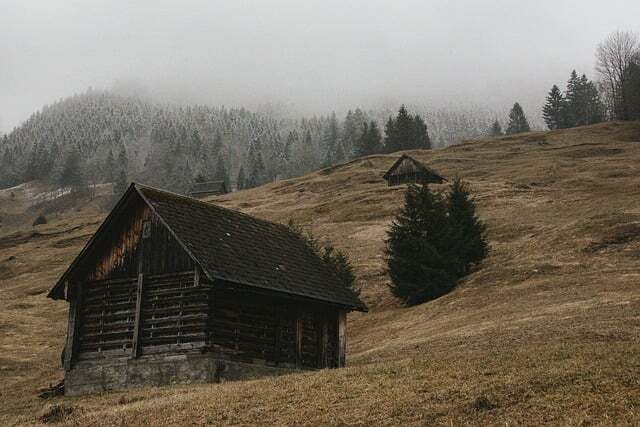
Featured Image Caption: Cabin Swiss Switzerland Hut
Jump to read...
Recognizing early warning signs of weather damage can prevent major headaches, time sinks, and money pits.
With proper preventative cabin wood maintenance, your getaway home can hold up and stay in the family for generations. On the other hand, failing to identify and treat weather damage can lead to catastrophic structural failure.
Read on to learn how to spot log rot, UV degradation, freeze-thaw deterioration, and other common signs and symptoms of weather damage.
Why Weatherproofing a Wood Cabin Is a Must
Wood and weather are always interacting. Too much moisture can cause wood to weaken, swell, and even rot. Excessive dryness can cause wood to become brittle, crack, and shrink.
These changes don’t happen overnight. Signs of weather damage typically turn into major problems over the course of multiple seasons. The good news is that you can take action before it’s too late. Here are some steps you can take to prevent weather damage:
- Apply protective exterior wood finishes and sealers.
- Seal cracks and gaps.
- Treat mildew and mold (and their causes).
- Install roof overhangs.
- Add air vents.
Cabin wood maintenance isn’t always preventative. When you notice a problem, you need to be proactive and treat it before a small issue turns into a major disaster. Here are the most common signs of weather damage to watch for:
Rotting Wood
Excessive moisture is a log cabin’s number one enemy. It’s not just storms and floods that can cause water damage. Over time, regular rainfall, melting snow, and humidity can cause water to become trapped inside the wood, and that moisture doesn’t evaporate easily.
Learning how to spot log rot is crucial. All too often, by the time log rot is obvious, the damage is already severe. Weatherproofing a wooden cabin isn’t always enough, either. Even a properly finished and sealed cabin can develop small gaps, checks, or other vulnerable areas that allow moisture to reach the wood.
Inspect your cabin for unusual discoloration, soft or spongy areas, crumbling wood, and other changes in the wood’s appearance or texture that may indicate decay. Keep an eye out for cracked, wrinkled grain patterns and peeling finishes.
Signs of weather damage caused by water can also be textural, so don’t rely only on your eyes. Rotting wood is often soft, spongy, crumbly, and/or powdery. If you suspect decay, gently probe the area with a thin screwdriver. Wood that feels unusually soft may indicate rot that needs to be addressed.
UV Damage
The sun’s ultraviolet radiation can slowly degrade the wood’s fibers and protective finish. Eventually, that wood becomes increasingly porous and vulnerable to water damage. It can also become brittle, crack, and shrink.
In most cases, the wood will turn a bleached, gray color before damage becomes too severe. Light checking is normal, but excessive splits and cracks are another common sign of sun damage. Upward-facing cracks are especially concerning because they can collect and hold moisture.
Freeze-Thaw Deterioration
Signs of weather damage can vary depending on the cabin’s climate. Cabin wood maintenance is especially critical in locations with distinct seasons.
When temperatures drop below freezing, moisture freezes and expands. Eventually, the moisture thaws and sinks deeper into the wood. This freeze-thaw cycle repeats for years, compounding the damage over time. Eventually, the ongoing accumulation of moisture can even cause foundational cracks, or worse.
Besides knowing how to spot log rot, look for loose and failing chinking and caulking caused by the wood expanding and contracting. Look for gaps where sealants meet the wood grain. The sealant may also have tears or cracks, and it may harden and lose its flexibility.
Mold and Mildew
Fungal growth is a sign of weather damage because it means that the wood has become cracked or porous enough to allow moisture to become trapped for long enough to accumulate mold and mildew. Look for white, black, or other unusual discoloration on the wood or finish. Green growth may be algae rather than mold.
Don’t Wait Until It’s Too Late
Even light cabin wood maintenance goes a long way. Weatherproofing a wooden cabin is a must to protect your investment!

By Andrew Lemieux
who is a creative writer, poet, and content strategist. He is passionate about literature, food, wine, travel, and sports. In his spare time he enjoys working on home projects and restoring the 1837 Greek Revival he and his wife own.
Member since December, 2023
View all the articles of Andrew Lemieux.








Leave a Reply