

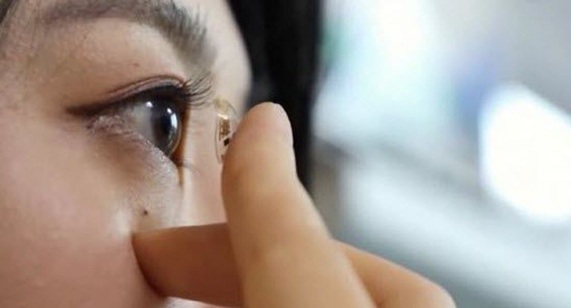
Featured Image Caption: Young Girl Wearing Lenses
Jump to read...
Wearable devices which exceed basic fitness trackers and smartwatches have emerged from the combination of digital technology and healthcare development. Smart contact lenses introduce a new digital health technology which combines optometric functions with advanced biosensing systems and data transmission capabilities and human-machine interface solutions. These devices transform clinician methods for tracking body functions while treating chronic illnesses and providing individualized treatment. Scientists and technology developers are developing clinical prototypes which drive the smart contact lens market to grow at an accelerated pace. The device shows that users require noninvasive diagnostic tests together with continuous health monitoring solutions which have created an ecosystem that develops around these devices.
Defining Smart Contact Lenses in Digital Health
Smart contact lenses function as electronic devices which users can wear on their eyes to replicate regular contact lens usage while their microelectronic components, sensor technology, and communication systems remain embedded. The lenses’ design creates a framework which determines the specific features that users will experience. Globally, approximately 2.2 billion people have some form of vision impairment with over 1 billion cases being preventable or unaddressed. The situation demonstrates urgent requirements for eye care innovations which smart contact lenses provide because they deliver both vision correction and sophisticated health monitoring capabilities.
- Vision augmentation employing digital capability.
- Methodological monitoring was performed, such as the measurement of intraocular pressure (IOP) and biomarkers found in tears.
- Interactive features, including the possible inclusion of augmented reality (AR) displays in some research prototypes.
Smart lenses use their tiny embedded technology to transmit health data to external devices which creates a system for ongoing health monitoring that does not require any medical procedures.
Key Digital Health Applications
Non Invasive Health Monitoring
Among the multiple digital health applications, smart contact lenses might be used in continuous monitoring of human vital statistics. A case in point could be:
- Glaucoma management: The Sensimed Triggerfish device represents an early smart contact lens technology which received FDA approval as the first actual smart contact lens system. The device detects minor eye shape changes which allow doctors to measure intraocular pressure, an important measurement for glaucoma treatment.
- Biochemical sensing: Researchers have invented a method for creating lenses that detect glucose in tear fluid, among other biomarkers, which offers possibilities for diabetes to be noninvasively monitored.
Continuous real time sensing enables clinicians to obtain long term data which traditional clinic-based measurements are unable to provide, thus enabling them to manage diseases with greater accuracy.
Disease Detection and Drug Delivery
Emerging research suggests that the potential impact of smart contact lenses will help monitor, among other things.
- Biomarker detection: Tear fluid contains molecules such as glucose and cortisol which function as potential early markers for systemic diseases. Smart lenses could sample these biomarkers through their noninvasive technology which eliminates the need for blood or needle sampling.
- Targeted therapy delivery: Experimental designs are testing contact lenses which deliver medication directly to the eye surface. This method shows potential to improve treatment outcomes for glaucoma and other ocular diseases.
The integration of diagnostic sensing with therapeutic delivery systems in smart contact lenses will create a new method of theranostic treatment which combines therapeutic and diagnostic functions into one device.
Augmented Vision and Digital Interaction
In addition to the use of smart lenses for health monitoring, they are being deployed in interactive, digital applications.
- Augmented reality (AR): There are prototypes in development that attempt to integrate digital information directly into users’ visual environment. This technology enables users to receive navigation assistance and notification alerts and access contextual information without needing external screens.
- Hands free control: To see if air gesture recognition could be utilized as a replacement technology for mobility-dependent people whose actions were once controlled initiatives, focuses were on consciousness/data processing capability, correctness, and satisfaction.
The existing AR lens prototypes have not yet advanced beyond their initial research phase, but their testing results show potential future applications for optical wearables which will connect with common digital systems.
Market Dynamics and Growth Projections
The smart contact lens market is expanding because material science and microelectronics and wireless communication technology have achieved essential technological progress. The industry reports predict the market Valuation in coming years will increase at a steady rate throughout the next ten years because of these following factors.
- The growth in demand for wearable health devices suited for chronic ailments management.
- Global advancements are taking place in the field of integrated sensors combined with bio-compatible materials.
- More investments are flowing into tech and life science sectors, especially in the health tech solutions.
The wearable medical devices market which includes smart contact lenses has grown by 30% adoption during the last few years because most new users join between the ages of 30 and 50. The trend shows that people who need both health convenience and monitoring solutions have started to embrace wearable health technology.
Smart lenses currently function as niche medical devices which market research expects to achieve wider usage in both clinical environments and consumer health applications. The wearable health device market operates under two main forces which found that evolving patient expectations drive market growth by creating demand for devices that provide convenient access to medical data.
Challenges and Limitations
Countless patients find disposable syringes very beneficial, but very few medical practitioners are ready to accept this as medical equipment due to the wide-spread use of traditional medical pumps.
- Technical complexity: Integrating biosensors and power management inside a lens poses an enormous challenge for all engineering disciplines.
- Regulatory approval: These instruments must meet the rigid criteria of safety and efficiency before they are released into common utilization where illnesses can be healed.
- User comfort and hygiene: Lenses need to be both safe for use and comfortable and cosmetically acceptable or form their unique individual aesthetic.
- Data privacy: The bioethics surroundings encountered in the digital health environment merely linked to the ethics of the biometrics in their biometric identity management system.
Fundraising activities need multiple stakeholders from different industries including technology and healthcare to work together as partners.
The development of smart contact lens market demonstrates how wearable technology has changed digital health by enabling sensors and diagnostic tools and interactive systems to maintain permanent body contact with users. As per Pristine Market Insights, the devices will enable personalized health tracking and chronic disease control together with new ways humans can interact with technology, once their prototypes reach advanced development and regulatory approval processes become established. Through ongoing scientific research and ethical implementation smart contact lenses will provide users access to immediate medical information which until now had been restricted to equipment found in research laboratories thereby transforming digital health assessment and treatment methods.
By Sandhya Jadhav
who is a research analyst specializing in healthcare technology and emerging medical innovations. She focuses on advancements in digital health, wearable devices, and vision care solutions. With strong analytical expertise, she delivers insightful research-backed perspectives on evolving trends shaping the future of smart medical technologies and patient-centric healthcare systems.
Member since October, 2025
View all the articles of Sandhya Jadhav.






Leave a Reply