

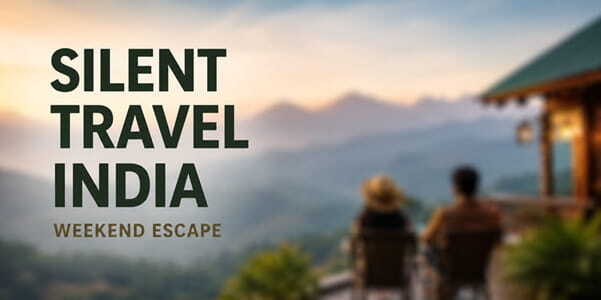
Featured Image Caption: Travelers Choosing Calm Stays and Quiet Escapes across India
Jump to read...
What Is Silent Travel in India?
Silent travel in India is no longer limited to meditation retreats or spiritual centers. People are planning holidays where noise, notifications, crowded itineraries, and packed schedules are intentionally left behind. The idea sounds simple. Travel slowly. Speak less. Observe more.
That shift is showing up in mountain cabins, forest stays, remote homestays, train journeys, village escapes, and wellness resorts where phones remain switched off for long stretches. Travelers aren’t chasing landmarks every hour anymore. They’re looking for stillness.
And honestly, that changes everything.
A growing group of travelers now prefer sunrise walks over nightlife plans. They’d rather sit beside a river with a notebook than spend the day jumping between crowded tourist spots. Quiet has become part of the experience itself.
Some travelers call it mindful travel. Others call it slow tourism. Yet the feeling behind it stays the same. People want trips that leave them mentally lighter instead of physically exhausted.
Why Quiet Escapes Are Suddenly Everywhere
Burnout plays a big role here. Workdays don’t really end anymore because phones keep conversations alive late into the night. Notifications follow people into meals, vacations, and even sleep. That constant noise builds slowly until it becomes impossible to ignore.
So travelers are changing their habits.
Many weekend travelers now search for locations with weak mobile signals, fewer crowds, local food, and open landscapes. It’s not about luxury alone. Sometimes the most memorable stay is a wooden cottage where mornings arrive with bird sounds and nothing else.
People also don’t want hyperplanned holidays anymore. You can see it in the way itineraries are changing. Earlier, trips focused on covering every nearby attraction. Now travelers often choose one location and stay there longer.
A single lakeside stay for several days feels more rewarding than rushing through multiple tourist spots in one weekend.
Families are noticing this shift too. Parents increasingly want children to experience slower environments where screens disappear naturally. Some boutique stays now organize gardening sessions, local cooking experiences, pottery activities, and guided nature walks instead of loud entertainment programs.
How Silent Travel Feels Different From Regular Tourism
Traditional tourism usually revolves around movement. Faster schedules. Bigger checklists. Constant photography. Silent travel works differently because the focus moves inward.
You aren’t trying to complete a destination.
You’re trying to experience it.
That difference changes traveler behavior in surprising ways. People wake up earlier. Meals become slower. Conversations become deeper. Even time feels different when every hour isn’t packed with activities.
Some travelers choose silent mornings where nobody in the group speaks until breakfast. Others spend entire afternoons reading beside tea plantations or hiking through villages without headphones. Small moments become memorable because attention returns to the present.
Interestingly, silent travel doesn’t always mean complete silence. That’s a common misunderstanding. It usually means reducing unnecessary stimulation so the mind can settle naturally.
A train passing through hills. Rain hitting a wooden roof. Wind moving through pine trees. Those sounds become part of the journey.
Destinations in India Perfect for Silent Travel
Several regions across India naturally fit this travel style because they already move at a slower pace. The environment does half the work for you.
Mountain Villages in Himachal Pradesh
Small villages near Jibhi, Tirthan Valley, and Kalpa attract travelers who want calm mornings and long nature walks. Internet access isn’t always perfect there, which many travelers secretly appreciate.
The best part? Nobody expects you to rush.
Local homestays often serve simple meals prepared from nearby farms. Travelers spend evenings around fireplaces instead of crowded cafes. That slower rhythm feels refreshing almost immediately.
Backwater Stays in Kerala
Kerala’s quieter backwater regions offer something rare. Movement without chaos. Houseboat stays and waterside cottages create a naturally slower routine where mornings begin with still water and soft conversations.
Ayurveda retreats have also expanded their wellness programs around silence, mindfulness, and reduced digital activity. Guests often combine traditional therapies with meditation sessions and local cuisine.
Forest Retreats in Uttarakhand
Forest stays near Mukteshwar and Pangot attract birdwatchers, writers, photographers, and travelers who simply want distance from city routines. Some travelers arrive for short breaks and end up extending their stay because the silence feels unexpectedly comforting.
Cloud movement becomes entertainment there.
That’s the charm.
Village Tourism in Rajasthan
Rural Rajasthan offers a quieter side that many tourists miss completely. Beyond palace tours and busy cities, there are villages where travelers experience folk music evenings, handmade meals, desert walks, and traditional lifestyles without large crowds.
Night skies in these areas feel unreal because artificial lighting stays minimal. Travelers often describe the stillness as the highlight of the trip.
The Rise of Digital Detox Holidays
Digital detox travel has become closely connected with silent travel in India. Many travelers no longer trust themselves to disconnect at home, so they intentionally choose environments where phone usage drops naturally.
Some stays now offer lock boxes for phones during meals or meditation sessions. Others avoid televisions entirely. A few properties even design rooms without strong Wi Fi signals because guests specifically request reduced connectivity.
And surprisingly, travelers enjoy it.
The first few hours usually feel uncomfortable. People keep checking pockets for phones that aren’t there. Then something shifts. Attention slowly returns to surroundings instead of screens.
Books come back. Long walks return. Conversations stretch naturally without interruptions.
Travelers also report sleeping better during these trips because screen exposure reduces sharply. That physical difference becomes noticeable very quickly.
Why Younger Travelers Are Choosing Slower Journeys
Younger travelers are often blamed for fast scrolling habits and shrinking attention spans, yet many are leading the silent travel movement. They aren’t rejecting travel itself. They’re rejecting performative travel.
There’s a difference.
Earlier, holidays often revolved around social media visibility. Travelers rushed from one photogenic location to another because online sharing became part of the experience. Now many travelers want private memories that don’t need constant posting.
Some groups actively avoid crowded tourist locations during peak weekends. Others choose offbeat train routes, heritage stays, camping experiences, and village tours where the atmosphere feels more personal.
Many remote workers are extending this trend further by mixing work with slower travel schedules. Instead of short rushed holidays, they spend longer periods in quieter towns while balancing flexible work hours.
That shift is influencing hospitality businesses too. Hotels and homestays increasingly design spaces around reading corners, outdoor seating, local food experiences, wellness sessions, and nature activities rather than loud entertainment setups.
How Hospitality Brands Are Adapting
The hospitality sector has noticed changing traveler behavior very quickly. Properties that once focused heavily on packed activity schedules now market calmness as a premium experience.
Silence sells differently.
You’ll notice it in the language used across travel campaigns. Words like mindful stay, forest retreat, slow mornings, unplugged weekends, wellness escape, and local immersion appear far more often now.
Boutique stays especially benefit from this shift because smaller properties naturally offer quieter experiences. Travelers increasingly prefer places with fewer rooms, personalized meals, local architecture, and open outdoor spaces.
Even food experiences are changing. Farm to table dining, regional recipes, outdoor breakfasts, and community cooking sessions now attract travelers who want meaningful experiences rather than formal luxury.
Some hotels also encourage screen free common areas. Others organize storytelling sessions, yoga mornings, village walks, and guided stargazing activities that fit the slower travel mood.
Queries Around Silent Travel in India
Is Silent Travel Only for Solo Travelers?
Not at all. Couples, families, friend groups, and even corporate teams now choose slower travel experiences because they create space for better conversations and reduced stress.
Do Silent Travel Experiences Cost More?
Some wellness retreats are expensive, though many silent travel experiences actually cost less because they focus on nature, local stays, and slower schedules instead of packed entertainment.
Can Travelers Work During Silent Travel Trips?
Yes. Many remote workers now combine flexible work schedules with quieter destinations where they can focus better and avoid city distractions.
Are Phones Completely Restricted?
That depends on the property or travel style. Some retreats encourage limited phone usage while others simply create environments where travelers naturally spend less time online.
Which Season Works Best for Silent Travel in India?
Monsoon and winter seasons are especially popular because landscapes feel calmer, temperatures stay pleasant in many regions, and tourist crowds reduce significantly.
Practical Tips Before Planning a Silent Travel Trip
Start small if you’re new to this style of travel. A short weekend trip works better than planning an extended silent retreat immediately. Your mind needs time to adjust to slower surroundings.
Choose accommodation carefully.
Read about the atmosphere, nearby activities, and location before booking. Some properties advertise quiet experiences while still remaining close to crowded tourist areas.
Pack differently too. Books, journals, comfortable walking shoes, and offline entertainment become more valuable during these trips than heavy gadgets.
Try leaving parts of your itinerary open instead of scheduling every hour. Silent travel works best when there’s room for spontaneity.
And don’t pressure yourself to experience complete silence instantly. The goal isn’t perfection. The goal is creating enough space to actually notice your surroundings again.
Will Silent Travel Continue Growing?
Everything suggests this travel style will continue expanding because the demand comes from lifestyle changes rather than temporary vacation trends. People are actively searching for slower routines, better sleep, calmer environments, and meaningful travel experiences.
Travel itself is becoming more intentional.
That doesn’t mean adventure tourism or luxury holidays disappear. It simply means travelers now want emotional value alongside sightseeing. They want trips that feel restorative instead of exhausting.
Silent travel in India fits naturally into that shift because the country already offers incredible diversity in landscapes, traditions, wellness practices, village experiences, forests, mountains, and spiritual environments.
Sometimes the best journey isn’t the loudest one.
It’s the one where your mind finally becomes quiet enough to notice where you are.
FAQs About Silent Travel in India
What should I pack for a silent travel experience?
Carry comfortable clothing, walking shoes, a journal, books, reusable water bottles, and weather friendly layers. Many travelers also carry offline music playlists or sketchbooks for relaxed downtime.
Is silent travel suitable for first time travelers?
Yes, because silent travel doesn’t require strict rules. First time travelers usually enjoy the slower pace since it reduces planning stress and allows more flexibility during the trip.
Can children enjoy quiet travel experiences?
Children often adapt surprisingly well to nature focused trips. Activities like gardening, birdwatching, village walks, and storytelling sessions usually keep them engaged without heavy screen use.
Do silent travel destinations have internet access?
Most destinations offer internet connectivity, though the speed and reliability may vary depending on the location. Some travelers intentionally prefer places with weaker networks for better digital breaks.
How long should a silent travel trip ideally be?
A short weekend getaway works well for beginners. Travelers who enjoy the slower rhythm often extend future trips for deeper relaxation and stronger connection with the destination.
Are wellness retreats part of silent travel?
Yes, many wellness retreats include mindfulness activities, yoga sessions, meditation spaces, and healthy food experiences that align closely with silent travel preferences.
Can silent travel improve mental focus?
Many travelers say reduced notifications, calmer surroundings, and slower schedules help them think clearly, sleep better, and feel more emotionally balanced during and after the trip.









Leave a Reply