

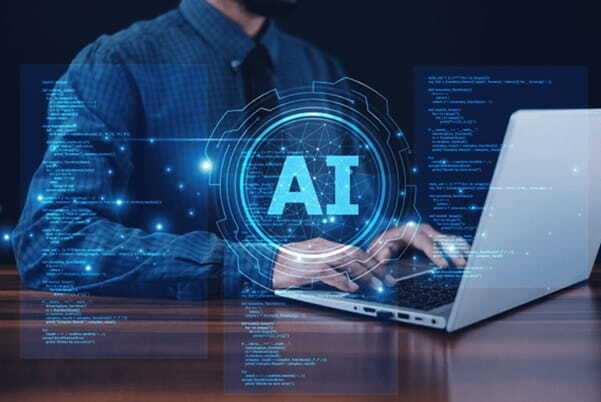
Featured Image Caption: Programmer Use AI while Working on Code
Jump to read...
Businesses are no longer asking whether to adopt artificial intelligence, instead they are asking how quickly they can make it work.
For organizations that rely on custom-built platforms, integrating AI has shifted from a competitive advantage to a baseline expectation. But meaningful AI integration in software development is not only about embedding a model and wait for improved outcomes.
AI integration in software development requires deliberate architecture decisions, a clear understanding of where AI technology delivers value, and the right team to implement AI without destabilizing what already works.
Why AI Technology Belongs in Your Custom Software?
Most software systems in production today were built to follow pre-defined rules, not to learn from outcomes. They process inputs and return outputs according to the given functions and features built into the system reliably, but rigidly.
Artificial intelligence changes this setting entirely as when we integrate AI into custom software applications, it’s not just to add a glamorous feature but it’s about giving your platform the ability to adapt.
This adaptability is critical especially when business objectives keep shifting, markets change, expectations of your users evolve, and the software development thought process you had three years ago now seem obsolete.
Integration of AI capabilities in software development we see today is enabling organizations turn static systems into intelligent software solutions that adapt and evolve with the business.
How to Integrate AI into Software?
Integration of AI in enterprise software or in any type of software works best when treated as a product capability and not a model API. The best approach is beginning with assessment and customizing AI models to ensure the best outcomes, followed by measuring results, and implementing on large scale.
Start With the Right Assessment of Existing Infrastructure
To integrate AI into software, start by analyzing your current software architecture. Here’s what to do;
- Map existing workflows
- Identify friction points
- Determine where AI models can deliver the fastest return
Whether in the software development process or in operations, or across customer-facing touchpoints, a detailed analysis is a critical starting point.
Pre-trained or Custom-Built AI Models Implementation
Not every software development or operations problem needs a custom-trained model.
In many cases, pre-trained models and cloud-based AI services, the kind you will find with Google Cloud, provide production-ready capabilities. These integrate cleanly into existing software and existing infrastructure.
However, modern AI tools have further streamlined the process to integrate AI capabilities without touching the full software development lifecycle and still deliver intelligent software solutions.
Phasing in AI Integration Without Breaking What Works
The most common concern enterprise AI integration is compatibility with legacy systems and existing systems.
A phased approach, which means to layer AI features into the development process and execute gradually, is always better than all-in-one rollouts.
The phased approach manages risk, preserves system performance, and keeps software engineers focused on outcomes rather than troubleshooting.
AI Use Cases in Enterprise Applications
Capabilities of AI includes automation, prediction, and personalization, among many others. How and where each application becomes relevant depends on the functions and objectives of the organization.
Process Automation and Operational Efficiency
Process automation is the ability to automate repetitive tasks, like;
- Data entry
- Document routing
- Approval workflows
AI powered automation in custom software eliminates the friction your team feels with manual work, and it reduces productivity at scale.
Machine learning enables AI systems to take over these routine tasks with higher accuracy and far less human error than manual processes.
As AI systems learn from their own outcomes and process changes the team makes over time, they get better with every input and output.
Predictive Analytics and Real-Time Decision-Making
Predictive analytics gives your software a new shift as it converts from reactive to proactive. Machine learning models analyze user behavior and process historical patterns to deliver actionable helping you make decisions in real-time at a pace no analyst can match manually.
In AI integration for ERP and CRM systems, where understanding user behavior and forecasting demand has a direct impact on revenue generation, this feature is immensely valuable.
Natural Language Processing and Virtual Assistants
Natural language processing (NLP) makes a system including an enterprise software understand human language.
Just as two people are conversing, a human can interact with a machine and this represents a significant leap from rigid query interfaces of traditional platforms.
In AI integration for ERP and CRM systems, NLP powers;
- Virtual assistants
- Intelligent search
- Contract analysis
- Support automation
It handles all the tasks while handling unstructured data software systems without AI cannot process.
For customer-facing deployments, this directly improves customer satisfaction and reduces support overhead as AI-enabled systems take care of the repetitive and all the basic tasks.
A second wave of natural language processing applications is now emerging through generative AI, which extends NLP into code generation and content workflows, effectively reshaping key areas of modern software development.
Computer Vision and Software Testing
Computer vision is one of the major technologies enabled by AI used in;
- Manufacturing
- Healthcare
- Logistics
- Retail
- Energy
- Finance
- Hospitality
- Media Streaming
- Sports
- eCommerce
Data scientists use computer vision and machine learning task inspection, which requires too much time and effort when done manually.
Within the AI integration in the software development context, it’s also transforming software testing, automating visual regression checks and improving code quality without slowing release cycles.
Predictive Maintenance
Predictive maintenance has the highest ROI among all the applications of AI services. Rather than reacting to failures, AI continuously monitors system performance and flags anomalies early in the process, effectively reducing downtime, abrupt maintenance pauses, and halts in operations.
Fraud Detection
Fraud detection is an equally high-stakes segment where AI is making headway. By processing transactions across the distributed software systems in real time, AI services can identify patterns that indicate security threats long before human reviewers catch them, strengthening enterprise risk management without adding operational overhead.
The Real Benefits of AI-Powered Automation in Custom Software
The key benefits of building AI-powered automation in custom software go well beyond speed:
- AI capabilities embedded in the software development process improve code quality through intelligent review and code refactoring support.
- Machine learning helps process data from disparate sources, turning raw inputs into structured intelligence.
- AI tools enable teams to automate processes that previously required dedicated headcount.
- User-friendly interfaces become more adaptive when AI technology powers personalization based on user behavior.
- Strong system integration across modules, enabled by well-designed AI systems, improves system functionality and processing power utilization.
- Data analysis at scale gives leadership actionable insights without creating bottlenecks for data scientists.
Conclusion
Integrating AI, which includes planning, implementation, and execution, requires expertise and time that most of the enterprises cannot afford, given the highly competitive market scenario in every industry.
But working with a seasoned enterprise AI development services provider with proven delivery experience in AI software development services, is what gets organizations from intent to impact. A provider who understands the challenges of AI integration in software development and can take a customized approach to development is what you need.
SPEC India is a reliable AI software development services provider with expertise in creating custom software and tailoring AI-enabled services to suit your business proceedings, objectives, and work scope.
By Ankit Kumar
– The Business Development Head at SPEC India brings extensive experience in helping enterprises adopt custom software, AI, data, and product engineering solutions. With deep insight into evolving business and technology landscapes, they share practical perspectives on digital transformation, enterprise innovation, and emerging technology trends. Their focus is on helping organizations make informed, future-ready technology decisions.
Member since May, 2026
View all the articles of Ankit Kumar.








Leave a Reply