

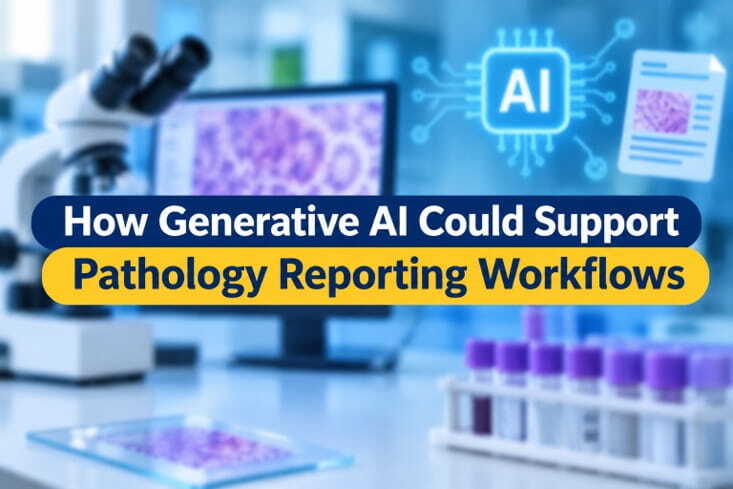
Featured Image Caption: Blurred pathology lab, microscope, AI technology in background.
Jump to read...
Pathologists face mounting pressure to deliver accurate, detailed reports while managing ever-growing workloads. The volume of tissue samples, imaging data, and diagnostic cases continues to expand, yet the time available for thorough analysis remains constrained. Generative artificial intelligence presents a compelling opportunity to streamline the reporting process, reduce administrative burden, and help pathologists focus on complex diagnostic reasoning. Understanding how AI could integrate into existing workflows requires examining both its technical capabilities and its practical applications within the pathology profession.
Automating Initial Report Drafting
Generative AI can process pathology data and produce preliminary report drafts that capture essential diagnostic information with minimal human intervention. When a pathologist enters clinical observations, microscopic findings, and relevant patient history into a system, AI can synthesize that input into a structured narrative following standard reporting conventions. This automation eliminates the need to manually compose routine report sections from scratch, substantially reducing time spent on clerical tasks. AI systems can standardize gross descriptions, organize microscopic findings by anatomical structure, and integrate relevant clinical context into appropriate report sections.
The advantage of this approach extends beyond simple time savings. AI-drafted reports maintain consistency in terminology and structure across multiple pathologists working within the same laboratory, making it easier for clinicians to locate critical information. Preliminary AI drafts can also serve as quality checkpoints, flagging incomplete observations or missing diagnostic considerations that might otherwise be overlooked during rapid reporting cycles. When every report follows the same logical progression and descriptive language, diagnostic communication across the care team becomes more reliable.
Enhancing Diagnostic Consistency Across Cases
Pathology interpretation can vary between practitioners based on experience, training background, and subtle differences in how evidence is weighted. Generative AI can help standardize diagnostic language and ensure that similar findings receive comparable interpretation across an entire laboratory. By analyzing patterns from previously reviewed cases, AI systems can identify how particular microscopic features correlate with specific diagnoses and alert pathologists when current cases demonstrate unusual or contradictory feature combinations. This consistency mechanism provides decision support that encourages standardized approaches to common diagnostic scenarios without replacing clinical judgment.
When pathologists use AI-assisted consistency tools, they maintain autonomy while benefiting from structured guidance about how findings have been interpreted historically within their laboratory and in the broader medical literature. A pathologist observing cellular features with multiple possible interpretations can draw on AI-surfaced precedent cases or relevant diagnostic criteria that apply to the current specimen. This support particularly benefits less experienced pathologists and helps newer laboratory staff develop diagnostic confidence aligned with institutional standards. Over time, the approach can reduce diagnostic drift and improve the reliability of reports issued from the same laboratory.
Reducing Administrative and Documentation Burden
Much of a pathologist’s day involves documentation tasks that, while necessary, consume time that could be directed toward diagnostic analysis or quality oversight. Generative AI can automate transcription, formatting, and other documentation requirements that currently demand manual attention. Voice-to-text capabilities powered by generative models can convert pathologist dictation into accurately formatted report text with minimal correction, and AI can extract diagnostic codes and prepare synoptic data without requiring separate data entry steps. Laboratories managing high case volumes rely on pathology software to ensure that AI-generated data, synoptic codes, and structured report content flow seamlessly into the information system without creating additional manual reconciliation work.
When routine documentation tasks are handled through AI assistance, pathologists can complete reports more quickly without sacrificing quality or accuracy. The time saved can be redirected toward challenging cases requiring deeper analysis, colleague consultation, or integration of complex clinical information. Reduced documentation burden also lowers the risk of human error associated with manual data entry during high-volume reporting periods.
Supporting Complex Case Analysis and Research Integration
Generative AI excels at synthesizing large volumes of information from multiple sources, making it particularly valuable for complex diagnostic cases that integrate histopathology with immunohistochemistry, molecular findings, and clinical context. AI systems can rapidly survey relevant literature, extract findings from previous similar cases within the laboratory, and organize that information to support diagnostic reasoning. When a pathologist encounters an unusual specimen, AI-assisted research integration can accelerate the process of finding precedent cases, relevant diagnostic criteria, and supporting evidence that informs the final interpretation.
When encountering a rare tumor type with multiple differential diagnoses, for example, an AI system could compile relevant immunohistochemical patterns, molecular markers, and published diagnostic algorithms into a structured summary reviewable in minutes rather than hours. This research support function extends the expertise available to individual pathologists and helps smaller laboratories access information resources that might otherwise require specialized consultation. The ability to quickly integrate diverse information sources helps pathologists make more informed decisions without spending excessive time on literature searches or case database review.
Improving Report Quality and Clinician Communication
Well-organized, clearly written pathology reports directly influence downstream clinical decision-making, yet report quality can vary based on communication style and time available for careful documentation. Generative AI can improve report clarity by suggesting language refinements, ensuring diagnostic statements are unambiguous, and highlighting areas where additional explanation might benefit the treating clinician. AI systems can also organize complex diagnostic conclusions into formats clinicians find most useful, separating primary findings from incidental observations and highlighting key prognostic information.
When AI tools support clearer reporting, clinicians receive more actionable information and spend less time interpreting diagnostic language or seeking clarification. Pathology reports that clearly distinguish between definitive diagnoses, supporting findings, and areas of uncertainty enable better-informed treatment decisions. Enhanced report quality also reduces the frequency of follow-up questions directed back to pathology departments. Over time, AI-assisted reporting can strengthen collaboration between pathology and clinical teams while ensuring that diagnostic expertise translates efficiently into patient care.
Conclusion
Generative AI offers meaningful opportunities to enhance pathology reporting workflows by automating routine documentation, supporting diagnostic consistency, and integrating complex information sources into coherent diagnostic narratives. Rather than replacing pathologist expertise, these tools augment human capability by handling time-consuming administrative tasks and providing structured decision support. Laboratories implementing AI-assisted reporting can expect improvements in report turnaround time, consistency, and quality, freeing experienced pathologists to focus on the complex interpretive challenges that define expert diagnostic practice. As these technologies continue to develop and integrate into laboratory information systems, practices that thoughtfully adopt AI assistance stand to improve both operational efficiency and the quality of diagnostic services delivered to patients and clinicians.












Leave a Reply