

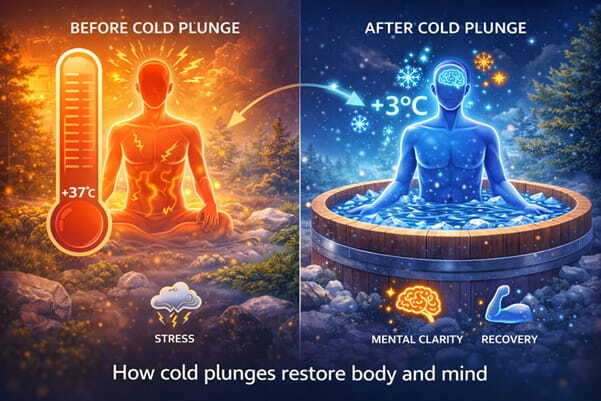
Featured Image Caption: Cold Exposure can Reset both Body and Mind
Jump to read...
Cold water shocks you. That’s the point.
Cold plunge therapy has quietly moved from elite athlete circles into everyday wellness routines, yet most people still don’t fully understand what actually happens beneath the surface when your body meets near-freezing water and why the effects can feel both uncomfortable and strangely addictive at the same time.
You’ve probably seen people stepping into tubs filled with ice, breathing sharply, then emerging calm and focused. It looks simple. It isn’t.
Let’s break it down properly.
What Is Cold Plunge Therapy
Cold plunge therapy means immersing your body in cold water for a short duration.
Sounds basic, right? But what makes it powerful isn’t the cold itself, it’s how your body reacts within seconds, triggering a cascade of internal responses that influence circulation, hormones, and even mental clarity in ways most daily habits don’t.
The temperature matters. So does timing. And your mindset going in changes everything.
What Happens Inside Your Body
The first few seconds feel intense. That’s not random.
As soon as you enter cold water, your blood vessels tighten rapidly. This process pushes blood toward your core, protecting vital organs while temporarily reducing circulation to your skin and limbs.
Now here’s where it gets interesting.
Once you step out, those vessels expand again, sending oxygen-rich blood rushing back through your body, which creates a flushing effect that many describe as refreshing, almost like hitting a reset button internally.
Your breathing shifts too. You’ll notice it instantly.
Cold exposure forces rapid, shallow breaths at first. If you stay calm and steady your breathing, your nervous system begins to shift from panic to control, and that transition is where much of the mental benefit lies.
It’s not just physical. It’s deeply neurological.
Why People Keep Coming Back
It’s not about endurance. It’s about contrast.
Cold plunge therapy creates a sharp contrast to your normal environment, and that contrast wakes up systems in your body that usually stay in the background, quietly regulating stress, recovery, and focus without you noticing them.
You step in tense. You step out alert.
And over time, your tolerance builds.
That doesn’t mean it gets easy. It means your response becomes more controlled, and that’s where the real shift happens.
You’re training your reaction, not just your body.
Muscle Recovery and Physical Reset
Athletes didn’t adopt cold plunges by accident.
After intense activity, your muscles experience small levels of stress and inflammation. Cold exposure helps slow that process, which can reduce soreness and improve how quickly your body feels ready for the next session.
But there’s a nuance here most people miss.
Cold plunges aren’t always ideal immediately after strength training if your goal is muscle growth. Your body needs some inflammation to adapt and build.
So timing matters.
Use cold plunges when recovery is your priority, not right after every workout without thinking through your goal.
Mental Clarity and Focus
This is where things get personal.
Cold water doesn’t just wake you up. It changes how your brain responds to stress.
When you stay in cold water and regulate your breathing, your brain learns that discomfort doesn’t equal danger. That rewiring carries into everyday situations, whether it’s handling pressure at work or staying calm in unpredictable moments.
You’re building a response pattern.
And that pattern shows up when you need it most.
Even short sessions can leave you feeling sharper, more present, and oddly grounded.
Mood Shifts and Emotional Balance
People often report feeling better after a cold plunge. There’s a reason.
Cold exposure activates parts of your nervous system linked to alertness and mood. It also encourages the release of certain natural chemicals in your body that support a sense of well-being and energy.
It’s not instant happiness.
It’s more like a subtle lift that feels clean and steady rather than overwhelming or artificial.
And that difference matters.
How to Start Safely
Don’t jump straight into extreme cold. That’s where most people go wrong.
Start with shorter durations and milder temperatures. Let your body adapt gradually.
Here’s a practical approach:
- Begin with cool showers before trying full immersion
- Keep your first few sessions brief
- Focus on steady breathing instead of duration
- Exit if you feel dizzy or overly uncomfortable
- Warm up naturally after, not with extreme heat immediately
Consistency beats intensity here.
You don’t need to prove anything to anyone.
Common Mistakes People Make
Trying too hard too soon.
That’s the biggest one. People see experienced practitioners staying in cold water for extended periods and assume they should match that immediately, which leads to unnecessary stress on the body instead of gradual adaptation.
Another mistake? Ignoring breathing.
If your breathing is chaotic, your body stays in panic mode. The real benefit comes when you slow it down, even when the cold feels overwhelming.
And then there’s inconsistency.
Doing it once and expecting long-term results won’t work. Like any practice, it builds over time.
Who Should Be Careful
Cold plunge therapy isn’t for everyone.
If you have certain medical conditions, especially related to heart health or blood pressure, it’s worth speaking with a professional before trying it.
Listen to your body.
If something feels off, stop. That instinct exists for a reason.
Cold Plunge vs Cold Shower
They’re not the same.
Cold showers offer benefits, especially for beginners, but full immersion creates a stronger physiological response because a larger surface area of your body is exposed at once, leading to a more noticeable shift in circulation and nervous system activation.
Still, showers are a great starting point.
Think of them as your entry into the practice.
Practical Routine You Can Try
Keep it simple.
- Start with a short cold shower daily
- Add one or two cold plunges per week
- Focus on breathing every session
- Track how you feel afterward, not just during
You’ll notice patterns.
And those patterns will guide you better than any fixed rule.
The Subtle Long-Term Shift
This isn’t about one session.
Over time, regular cold exposure can change how your body handles stress, how quickly you recover, and how clearly you think under pressure, which is why many people quietly integrate it into their routines without making a big deal about it.
It becomes part of how you operate.
Not just something you try.
FAQs
What is the ideal duration for cold plunge therapy?
Start with short sessions and build gradually. Even brief exposure can be effective when done consistently with controlled breathing and awareness.
Can beginners try cold plunge therapy safely?
Yes, beginners can start safely by easing into it with cooler showers first and progressing slowly while paying close attention to how their body reacts.
Does cold plunge therapy help with stress?
It helps train your response to stress by teaching your body to stay calm under discomfort, which carries over into daily situations.
Is daily cold plunge necessary?
It isn’t required. A few sessions each week can still create noticeable benefits without overwhelming your system.
How does breathing affect the experience?
Breathing controls your nervous system response. Slow, steady breaths help shift your body from panic to control during cold exposure.
Can cold plunge improve sleep quality?
Some people notice better sleep when sessions are timed appropriately, especially when the body transitions into a relaxed state afterward.
Should you eat before a cold plunge?
Light meals are fine, but avoid heavy eating just before immersion as your body is already adjusting to temperature stress.
What should you do after a session?
Let your body warm up naturally. Gentle movement helps restore circulation without shocking your system again.














Leave a Reply