

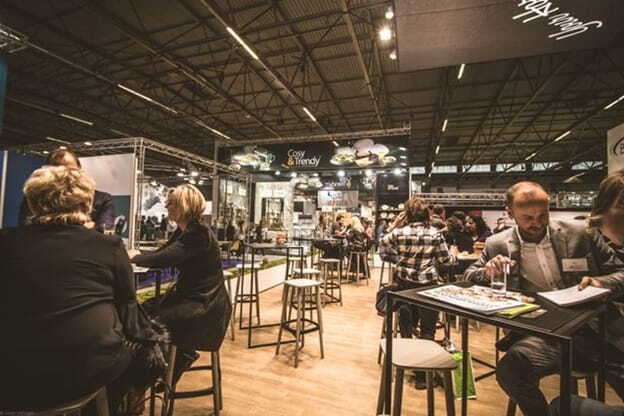
Featured Image Caption: A bustling indoor business expo with professionals networking and engaging at various booths.
Jump to read...
A memorable exhibit space does more than showcase products. It captures attention, communicates brand identity, and creates an experience that visitors remember long after the event ends. Strong design choices help exhibitors stand out in a crowded hall and encourage meaningful engagement with attendees. When each element of the space is intentional and cohesive, the entire presentation becomes more effective. Understanding the principles that shape a successful exhibit helps businesses create displays that leave a lasting impression.
Establishing a Clear Visual Identity
A strong visual identity is the foundation of any memorable exhibit space. Visitors should immediately recognize who you are and what your brand represents. Consistent colors, high quality graphics, and well placed logos help create a polished and cohesive look. This visual clarity builds trust and makes your space more inviting. When your design reflects your brand’s personality, it becomes easier for attendees to connect with your message. A clear visual identity also helps your exhibit stand out among the many tradeshow booths competing for attention.
Creating an Engaging Layout That Supports Flow
The layout of an exhibit influences how visitors move through the space and interact with your team. A well designed layout should feel open, intuitive, and comfortable. Strategic placement of displays, product areas, and conversation zones encourages attendees to explore without feeling crowded. A thoughtful layout also supports staff by giving them the space they need to demonstrate products and engage in meaningful conversations. When the flow feels natural, visitors are more likely to stay longer and absorb your message.
Using Lighting to Highlight Key Features
Lighting plays a powerful role in shaping the atmosphere of an exhibit. Effective lighting draws attention to important elements, enhances visibility, and creates a welcoming environment. Accent lighting can highlight products or graphics, while softer ambient lighting helps set the overall tone. When used strategically, lighting guides the visitor’s eye and reinforces the visual hierarchy of your space. It also adds depth and dimension, making your exhibit feel more dynamic and polished.
Incorporating Interactive Elements for Deeper Engagement
Interactive features help transform an exhibit from a static display into an immersive experience. Touchscreens, product demonstrations, hands on samples, or digital features encourage visitors to participate actively rather than simply observe. These elements create opportunities for deeper engagement and help attendees connect with your brand on a personal level. Interactive components also make your space more memorable, increasing the likelihood that visitors will recall your company after the event. When integrated thoughtfully, these features enhance the overall impact of your exhibit.
Crafting Clear Messaging That Communicates Value
In a busy event environment, messaging must be concise and compelling. Visitors should understand your value within seconds of approaching your space. Clear headlines, focused descriptions, and well placed content help communicate your message quickly and effectively. Strong messaging highlights what sets your brand apart and encourages attendees to learn more. When your message is easy to understand, visitors are more likely to engage in conversation and explore your offerings further. Clear communication strengthens your overall presentation and supports your team’s efforts throughout the event.
Conclusion
Creating a memorable exhibit space involves establishing a strong visual identity, designing an engaging layout, using lighting effectively, incorporating interactive elements, and crafting clear messaging. When these design principles work together, they create an exhibit that attracts attention, supports engagement, and leaves a lasting impression on every visitor.








Leave a Reply