

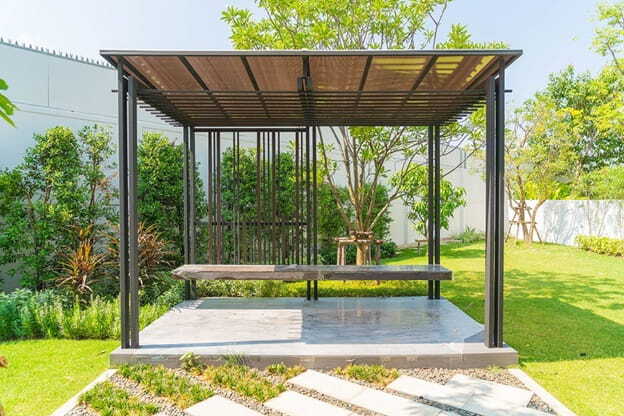
Featured Image Caption: Empty Pavilion in Garden
Jump to read...
You spend thousands on your vehicle, maintain it religiously, and yet leave it sitting outside every night baking under the summer sun, freezing through winter, and getting pelted with hail, bird droppings, and tree sap.
A steel carport fixes that. But here’s the thing, most buyers only find out the real story after they’ve already made their purchase. According to Wikipedia’s overview of carport structures, a carport is one of the most cost-effective covered parking solutions available yet the gap between a well-planned purchase and a poorly planned one can cost homeowners hundreds of dollars and years of frustration.
The wrong size, the wrong roof style, or skipping a permit check can turn a smart investment into a frustrating headache. This guide is your honest, no-nonsense breakdown of everything you need to know about steel carports before you spend a single dollar. By the end, you’ll know exactly what to look for, what to avoid, and whether a steel carport is genuinely right for your situation.
What Exactly Is a Steel Carport and How Is It Different?
A steel carport is a semi-open or fully enclosed structure made from galvanized or galvalume steel, designed to shelter vehicles from the elements. Unlike a traditional garage, it doesn’t require a full foundation, permits in most regions, or months of construction time.
Think of it this way: if a garage is a permanent house room for your car, a steel carport is a sturdy, professional-grade umbrella. It gets the job done faster, cheaper, and with far less hassle.
Compared to wood carports, steel doesn’t rot, warp, or require constant repainting. Compared to aluminum, steel offers significantly more strength meaning it can handle heavy snow loads, strong winds, and the occasional falling branch without bending out of shape. If you’re exploring broader home improvement decisions alongside this, the Home Remodeling section on InspiringMeMe covers a wide range of practical upgrades that complement a steel carport installation perfectly.
Steel carports can shelter anything from a single compact car to an entire fleet of RVs. That versatility is one of their biggest selling points.
5 Real Benefits of Steel Carports Homeowners Often Overlook
Most people know steel carports protect vehicles. But the advantages go much deeper than that and these are the ones sellers rarely mention upfront.
Weather Resistance That Actually Holds Up
Steel carports are engineered to handle real weather, not just light drizzle. Galvanized steel is coated to resist rust, while premium models can handle wind speeds of 90 to 140 mph depending on their design rating. Whether you’re dealing with intense Indian monsoons or brutal North American blizzards, a properly rated steel carport won’t flinch.
UV rays are another silent killer for vehicle paint. A steel carport with a solid roof cuts off direct sun exposure, drastically slowing paint oxidation and interior fading something that could save you serious money on vehicle maintenance over time.
Maintenance That’s Almost Zero
Ask any homeowner with a wood carport how much time they spend sanding, painting, and replacing rotted boards. It’s a never-ending cycle. Steel carports? An annual rinse with a garden hose and a quick bolt inspection is genuinely all you need. No termites. No warping. No peeling paint.
This low-maintenance nature makes steel carports particularly popular with busy families and rental property owners who can’t afford to spend weekends on upkeep.
Sizes and Configurations for Every Situation
Need shelter for one small sedan? Done. Want to cover two full-size pickup trucks and an RV? That’s doable too. Steel carports are manufactured in custom widths, lengths, and heights meaning you’re not forced into a one-size-fits-all solution. You can order exactly what your property and vehicles require.
Installation Measured in Days, Not Months
A standard single-car steel carport can be installed professionally in a single day. Larger structures typically take two to three days. Contrast that with a traditional garage build which often takes six to twelve weeks and involves multiple contractors, permits, and inspections.
If you need shelter quickly (say, before monsoon season or a harsh winter), steel carports are one of the only practical options.
Genuine Impact on Property Value
A steel carport signals to potential buyers that the property is well-maintained and that vehicles (or equipment) have been protected. In regions where covered parking is rare, a steel carport can meaningfully increase curb appeal and perceived property value. This isn’t marketing fluff real estate agents consistently note that functional outbuildings improve property listings.
Types of Steel Carports – Which One Is Right for You?
Choosing the wrong carport type is one of the most common mistakes buyers make. Here’s a clear breakdown of the four main styles:
Regular Style (Boxed Eave)
The most affordable option. The roof panels run horizontally, giving the carport a classic barn-style look. Regular style works well in mild climates with minimal rainfall and light wind. If you’re in a region with heavy snow or strong storms, this style is not your best bet water and debris can pool on horizontal panels.
A-Frame Horizontal
A step up in both look and function. The roof has a classic A-frame pitch, but the panels still run horizontally. Better drainage than regular style, more visually appealing, and moderately priced. Great for homeowners who want the A-frame aesthetic without the premium price tag of vertical roofing.
Vertical Roof Style
This is the gold standard for steel carports. Roof panels run vertically (top to bottom), meaning rain, snow, and debris slide right off rather than accumulating. Vertical roof carports are stronger, last longer, and are strongly recommended for areas with heavy precipitation or high winds. Yes, they cost a bit more upfront but they’re worth every penny.
Enclosed Steel Carports
When you need more than just a roof, enclosed carports add side panels and doors, effectively creating a budget-friendly alternative to a full garage. These are ideal for storing tools, motorcycles, or equipment that needs protection from both weather and theft.
Here’s a quick comparison to help you decide:
| Feature | Steel Carport | Traditional Garage | Wood Carport |
| Cost | Low–Medium | High | Low |
| Installation Time | 1-3 Days | Weeks/Months | 2-5 Days |
| Maintenance | Very Low | Moderate | High |
| Durability | 25-40 Years | 30-50 Years | 10-15 Years |
| Permit Required | Sometimes | Yes | Sometimes |
| Customizable | Highly | Limited | Moderate |
How Much Do Steel Carports Cost? A Realistic Breakdown
Cost is where most buyers get surprised usually because they’re quoted a base price and don’t account for everything that goes into a complete installation.
A basic single-car steel carport starts at around $800 to $1,500 in the US (or equivalent in other markets). A double-car unit typically runs $1,500 to $3,000. Large commercial-grade or RV carports can go from $3,000 to $8,000 or more depending on size and customization.
Here’s what affects the final price:
- Roof style – vertical roofs cost more than regular style
- Size – width, length, and height all affect material costs
- Gauge of steel – heavier gauge means stronger but pricier
- Anchoring system – concrete anchoring costs more than mobile home anchors
- Add-ons – side panels, doors, windows, and gutters all add to the total
- Location – delivery and installation fees vary by region
The important thing to remember: a well-made steel carport is a one-time expense that pays for itself through reduced vehicle damage, lower maintenance costs, and property value improvement. Cheap out on quality, and you’ll likely pay for it in repairs within three to five years.
Steel Carport vs. Traditional Garage, When Should You Choose What?
This is the comparison most homeowners get stuck on. Here’s the honest answer: choose based on your specific situation, not just your budget.
Choose a steel carport if:
- You need coverage quickly
- Your budget is under $5,000
- You don’t need full enclosure or lockable security
- Your local regulations don’t require a full permit for open structures
- You rent your home or may need to relocate the structure
Choose a traditional garage if:
- Security is a top priority (lockable, enclosed)
- You want living space above or attached to the structure
- You’re making a permanent, long-term investment in the property
- Local building codes require enclosed structures for legal parking
In most practical situations especially for homeowners who simply want to protect one or two vehicles, a quality steel carport delivers 80% of the benefit of a garage at 20 to 30% of the cost.
Common Mistakes People Make When Buying a Steel Carport
These mistakes come up again and again, and they’re almost entirely avoidable with a little upfront research.
Buying the Wrong Size
This is the number one error. People measure the length of their car, add a couple of feet, and call it done. In reality, you need at least 2 to 3 feet of clearance on each side for comfortable entry and exit, plus extra length for the front and rear. Always size up when in doubt, you’ll use the extra space.
Ignoring Foundation Requirements
A steel carport sitting on unstable ground will shift, lean, and eventually fail. Whether you’re using a concrete slab, gravel pad, or anchored posts, the foundation must be level and solid. Skipping this step is the most common reason for early structural problems.
Skipping the Permit Check
Many local jurisdictions require permits even for semi-open structures. Getting caught without one can mean fines, mandatory removal, or complications when selling your property. Call your local municipal office before purchasing, it takes ten minutes and can save you significant trouble.
Choosing Price Over Quality
The cheapest steel carports use thin-gauge metal that dents, rusts, and bends under moderate stress. A carport that fails in three years isn’t a bargain, it’s a loss. Stick to reputable manufacturers who offer certifiable wind and snow load ratings, and don’t be shy about asking for documentation.
Tips to Maintain Your Steel Carport for 20+ Years
A good steel carport requires minimal maintenance but ‘minimal’ doesn’t mean ‘none.’ Here’s what a proper annual maintenance routine looks like:
- Rinse the entire structure with a garden hose to remove dirt, debris, and bird droppings that can hold moisture against the metal
- Inspect all bolts and fasteners and tighten any that have loosened vibration from wind and use naturally loosens hardware over time
- Check the roof panels for scratches or chips in the coating and apply touch-up paint or sealant to exposed metal immediately
- Clear gutters and drainage channels if your model has them blocked drainage causes pooling, which accelerates rust
- Inspect anchor points at ground level, especially after heavy storms or significant rainfall
Beyond the annual check, keep the area under and around your carport clear of standing water and vegetation. Plants growing against the metal base trap moisture and are a leading cause of premature rust.
Follow these simple steps and a quality steel carport will serve you reliably for twenty-five to forty years.
Final Thoughts
Steel carports aren’t a perfect solution for every situation but for the vast majority of homeowners who need reliable, affordable, and fast vehicle protection, they’re one of the smartest purchases you can make.
The key is to go in with accurate information: know your size requirements, choose the right roof style for your climate, check local regulations, and don’t sacrifice quality for a lower price tag.
If you’re based in Queensland and want to see what well-engineered, locally built options look like, Steel Carports Brisbane by Debret is a solid starting point, they specialise in custom steel carport solutions designed and built to handle Australian weather conditions with no compromise on quality.
Do that, and a steel carport will give you decades of trouble-free protection and you’ll wonder why you waited this long to get one.

By Joseph Webb
who is an excellent blogger and philosopher, His keen observation provides useful information that helps readers to get more ideas.
Member since April, 2018
View all the articles of Joseph Webb.









Leave a Reply