

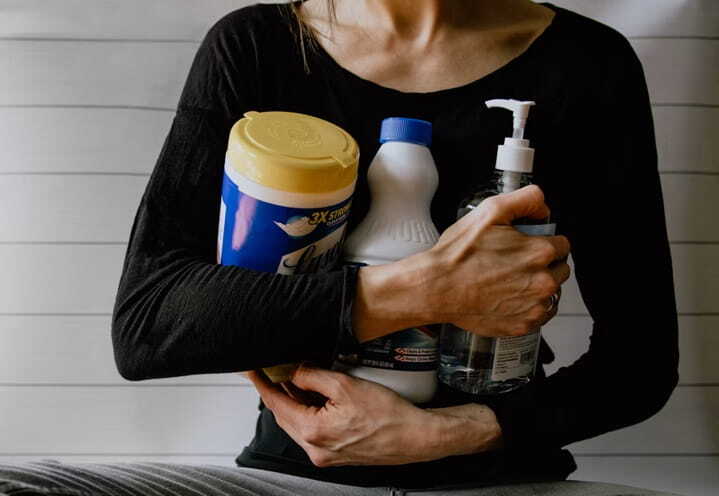
Featured Image Caption: Woman in black long sleeve shirt holding white and yellow plastic bottle.
Jump to read...
Takeaways:
- Many household items can harm the environment and your loved ones if you don’t dispose of them properly, including sharps, batteries, and household cleaners.
- Some of these items can contribute to community pollution and pose health and physical hazards to workers, children, and pets.
- Appropriate disposal may require a simple solution, like a specialty sharps container, or something more complicated, like disposal at a specific site.
Household Hazardous Waste
Often, products you think are innocuous are actually extremely toxic to your family and community. Make sure you protect yourself and your home by learning about common household items that need specialty disposal.
Sharps
Whether you’re a diabetic using lancets on a regular basis or you need to use the occasional EpiPen, you should be aware of safe sharps disposal methods. If you use sharps pretty rarely, you can get away with putting them in a sturdy plastic container, like a laundry detergent bottle. However, if you use sharps daily, you may want something better, like a specialty sharps container for razor blades, syringes, lancets, and more.
Here are the FDA recommendations for your container to ensure safe sharps disposal at home:
- Durable, puncture-resistant, and leak-resistant plastic
- Sturdy bottom that won’t tip over
- Closable, tight-fitting lid
- Properly labeled for hazardous waste
Sharps container cabinets can safely store your plastic bins until they’re full and ready for replacement.
Batteries
Batteries often contain heavy metals and can spark fires, even when they’re used up. If you’re still using disposable batteries instead of rechargeable options, you must collect them and drop them off at battery recycling points. Simply search for hazardous waste disposal sites near you to drop off your latest batch.
If it takes you a while to accumulate dead batteries, make sure to store them in a leak-proof battery organizer to prevent short-circuiting. Keep this box in a cool, dry place that’s inaccessible to children and pets.
Pesticides
Many people use pesticides at home to keep rodents and insects out of their space. Most commonly, you may spray the exterior of your home every year to create a barrier against pests. But even once your pesticide container is empty, it’s still a hazard to the environment, your family, and your community.
Until you’re ready to dispose of your pesticides, store them in a cool, dry place. Typically, these products have disposal instructions on the label for your convenience. If you’re not sure what to do with an empty container, reach out to your local hazardous waste facility for guidance.
Household Cleaners
Cleaning products can be corrosive and toxic on their own, but when mixed, the reactions can be incredibly unpredictable. This is why disposing of them according to safety guidelines is essential. Keep empty containers separate and away from children and pets before disposal.
Follow the label instructions for safe disposal or contact the household hazardous waste program near you to learn more about disposal sites or collection.
Paint
Some paints are flammable or toxic, posing risks to individuals and communities. Make sure you’re not risking your life or your home with proper storage in sealed containers away from heat and electrical wiring.
When you’re ready to toss paint, primer, or stains, reach out to your local Household Hazardous Waste (HHW) facility near you to discuss drop-off or collection.
Light Bulbs
While all light bulbs can break in the recycling bin, making their disposal a sharps concern, fluorescent lights also contain mercury, which is toxic to humans and the environment. If you’re planning to get rid of some dead light bulbs, make sure you always take them to a designated recycling facility, as tossing them in your household bin could result in cuts and poisoning for your family or waste management workers.
More Disposal Tips
In addition to knowing your local disposal sites and using safe containers for storage, you should always check the labels of hazardous household items for disposal instructions.
And if you’re tired of single-use or short-term household products, consider switching to eco-friendly alternatives wherever possible!

By Aaron Smith
who is an LA-based content strategist and consultant in support of STEM firms and medical practices. He covers industry developments and helps companies connect with clients. In his free time, Aaron enjoys swimming, swing dancing, and sci-fi novels.
Member since December, 2024
View all the articles of Aaron Smith.











Leave a Reply